Context
Nasoni and Porto's Baroque
Why Porto is called the city of Baroque in Portugal, what Nicolau Nasoni built there besides the Clérigos, and which details to look for in the old centre.
Book a seat in the nave ↗The city of Baroque
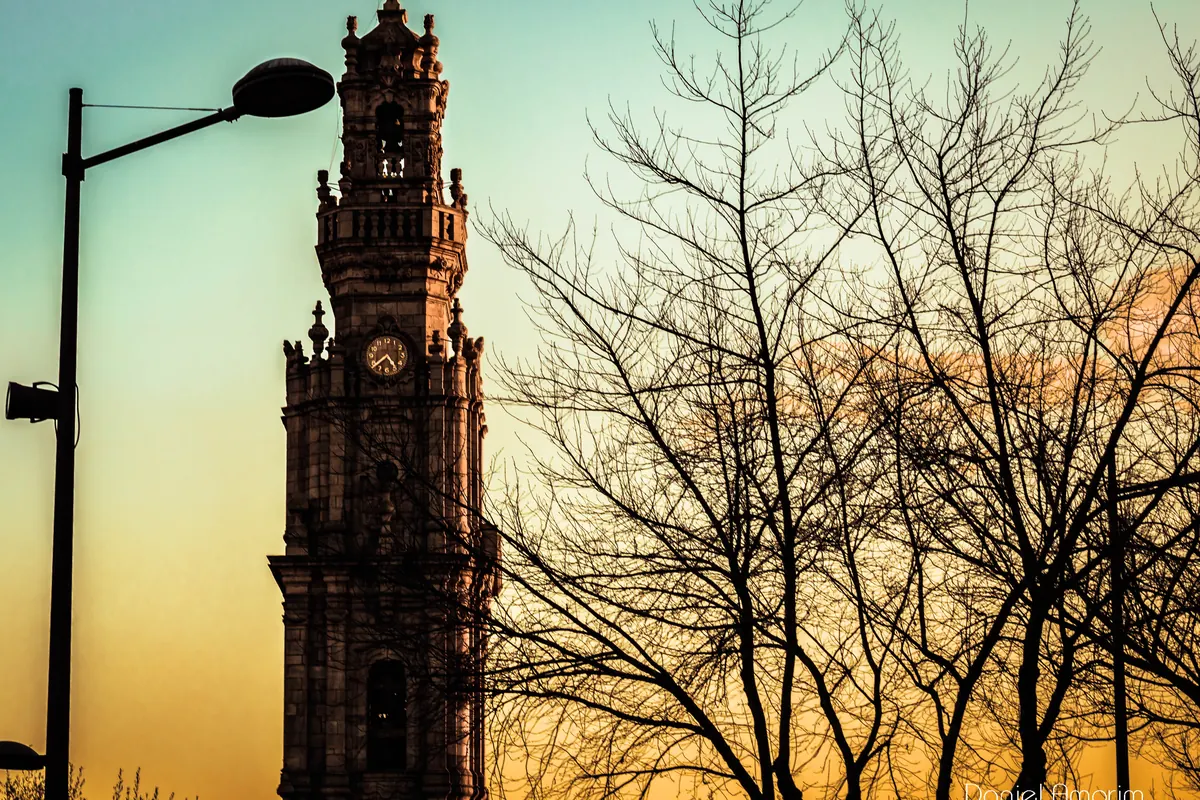
In the eighteenth century the north of Portugal, richer and more populous than much of the country, saw a wave of new churches, convents and palaces. Porto was at its centre, and the English Wikipedia article on Baroque architecture in Portugal calls it the city of Baroque in Portugal. Much of that reputation rests on one architect, Nicolau Nasoni, whose theatrical buildings, the Clérigos tower above all, still shape the old centre.
A painter turned architect
Nasoni arrived from Malta in the 1720s as a decorative painter, invited to work on Porto Cathedral. His first recorded work in the city was a set of frescoes on the cathedral walls, where he introduced quadratura, the painted illusion of architecture. That training shows in his buildings, which are composed for the eye, with façades that work like stage sets above steep streets.
Nasoni at the cathedral
At the cathedral, Nasoni added a granite porch on the north side and a loggia, and designed organ cases and a silver altarpiece. Next to it he planned the large Episcopal Palace, with a façade some 58 metres long, though only part was finished in his lifetime. Together they show how much of central Porto's eighteenth-century face comes from one man, and they make a natural pairing for anyone curious about the architect behind the tower.
Palaces and quintas
Nasoni's work went well beyond churches. The Wikipedia list of his buildings includes the Palace of São João Novo and the Palace of Freixo in the city, and country houses with gardens such as the Quinta do Chantre, laid out with fountains along a central axis, and the Quinta de Ramalde. Across them runs the same idea: architecture as a stage, with façades, stairs and gardens arranged to be seen from a distance and approached with ceremony.
Gilded wood and granite
Two materials define Baroque Porto. Granite carries the carving on façades like the Clérigos. Inside, gilded woodcarving, known in Portuguese as talha dourada, took on a national character in this period, covering altars and chapels in gold. In the Clérigos you can see both, with grey granite and pink panels set against gilt balconies and side altars.
What survived
The Clérigos withstood the great earthquake of 1755. Its oval plan, unusual for a church, became one of the best-known examples of Nasoni's style. Nasoni himself chose to be buried there: he joined the brotherhood in 1743 and lies in the crypt, in a grave that was never marked. A restoration of the church and tower was completed in 2014.
Seeing it in an evening
If you have one evening, combine the light show with a short walk past the façades of the old centre around São Bento and the cathedral before the session. The light show uses the Clérigos interior as its screen, so seeing other Nasoni buildings first sharpens what you notice inside: the same curves, the same love of theatre, the same contrast of stone and gold.
What to look for
Once you know the signs, Nasoni's Porto is easy to spot. Look for granite carved as freely as wood, with garlands, shells and scrolls; for façades that seem taller than they are, because they are narrow; and for grand stairs that turn arrival into a small procession. Inside, look for the contrast of grey stone and gold, and for painted architecture that pretends to be real. The Clérigos has all of them, which explains why it suits projected light so well.
Sources